
Shoulder Pain Physio in Willoughby: Rotator Cuff, Bursitis and More


If you’re looking for shoulder physio in Willoughby because pain is making it harder to sleep, lift, reach, work, train or play sport, this page is for you. At Willoughby Health, our shoulder pain physio in Willoughby focuses on identifying what is contributing to your symptoms and building a tailored plan that may help you move with more confidence over time.
What shoulder pain is and who it affects
Shoulder pain is common across many age groups and activity levels. We see it in office workers, parents lifting children, tradies, gym members, swimmers, racquet sport players, and older adults noticing pain or stiffness with everyday movement.
The shoulder is a mobile joint, which is useful for reaching, lifting and overhead activity, but that mobility also means several structures can become irritated. Common presentations include:
- Rotator cuff-related shoulder pain
- Shoulder bursitis
- Frozen shoulder
- Tendon irritation
- Shoulder stiffness after a flare-up or injury
- Pain linked to overload from work, gym or sport
- Shoulder pain influenced by neck or upper back movement
At our North Willoughby clinic, shoulder pain physio often involves looking beyond the sore area itself. The way your shoulder blade moves, how much load your shoulder is doing, your strength, sleep, work set-up, training habits and past injuries can all play a role.

Common causes and contributing factors
Shoulder pain does not always come from one single event. For many people in Willoughby, Northbridge, Naremburn, Artarmon and Chatswood, symptoms build gradually when the shoulder is asked to do more than it is currently prepared for.
Common contributors include:
- A sudden increase in lifting, overhead work, gym training or sport
- Repetitive reaching or sustained postures
- Reduced strength or endurance around the shoulder and upper back
- Poor tolerance to certain positions, especially overhead or out to the side
- Previous shoulder injury or periods of inactivity
- Age-related tendon or joint changes
- Stiffness that develops after pain causes you to avoid movement
Some people are told they have “bursitis” or a “rotator cuff tear” after a scan. Imaging can be useful in some situations, but scans do not always tell the full story. Many people have age-related changes on imaging without pain, while others have significant pain with only minor scan findings. That is why a clinical assessment matters.
When to see a physio or chiro in Willoughby for shoulder pain
It can be worth seeing a shoulder physio in Willoughby if:
- Your shoulder pain has lasted more than a week or two.
- Reaching, dressing, sleeping or lifting has become difficult.
- You feel weakness, catching, or reduced confidence using the arm.
- Your symptoms are stopping you from training, swimming, working or playing sport.
- Your shoulder is becoming increasingly stiff.
- You are unsure whether to rest, stretch, strengthen or modify activity.
You should also seek prompt medical review if shoulder pain follows a significant fall or collision, if you cannot lift the arm at all after an injury, or if you have unusual symptoms such as fever, unexplained weight loss, chest pain, or marked swelling.
If you are not sure where to start, you can call the clinic or contact Willoughby Health for guidance about whether physiotherapy or chiropractic care is the right next step.
What happens in a shoulder physio assessment at Willoughby Health
Your first appointment is designed to work out what is driving the pain and what is most likely to help. At Willoughby Health, assessments are one-on-one, with time to listen, examine properly and explain things clearly.
History and symptom review
We start by asking about:
- When the pain began and whether it came on suddenly or gradually
- What movements aggravate it, such as reaching overhead, behind your back or lying on that side
- Whether the pain affects sleep, work, gym, sport or daily tasks
- Any past shoulder, neck or upper back issues
- Your goals, such as returning to swimming, tennis, gym, work duties or comfortable sleep
Movement and function testing
We then assess how your shoulder is moving and functioning. This may include:
- Range of motion, such as lifting the arm forward, out to the side and behind the back
- Strength testing for the rotator cuff and surrounding muscles
- Shoulder blade control and upper back movement
- Functional tasks relevant to you, such as lifting, pressing, hanging, serving, throwing or reaching into cupboards
- Screening of the neck if your symptoms suggest referral from higher up
Making sense of the findings
The aim is not just to name a structure, but to understand the pattern of your pain, what is loading it, and which factors are keeping it going. We then explain the likely diagnosis and outline a management plan tailored to you.
If you would like a clear assessment and an individual plan, you can book an appointment with our Willoughby team.
Treatment options we may use for shoulder pain physio in Willoughby
Shoulder pain treatment is usually most effective when it combines symptom relief, progressive exercise, load management and education. The right mix depends on whether you have rotator cuff-related pain, bursitis, frozen shoulder, post-injury weakness, or another presentation.

Exercise-based rehabilitation
Exercise is often a core part of shoulder pain physio in Willoughby. The goal is to improve the shoulder’s capacity so everyday movement, work and sport feel more manageable.
Your program may include:
- Gentle range of motion exercises to reduce stiffness
- Rotator cuff strengthening
- Shoulder blade and upper back exercises
- Gradual return-to-gym or overhead loading
- Functional drills matched to work or sport
Exercises are selected based on your current tolerance. More is not always better. The aim is to load the shoulder enough to help adaptation without unnecessarily flaring it up.

Load management and activity modification
Temporary changes to your routine can be helpful while the shoulder settles and builds strength. This might include:
- Reducing overhead lifting for a short period
- Modifying gym movements such as bench press, shoulder press or dips
- Changing sleep position
- Adjusting work set-up or repetitive tasks
- Pacing your return to swimming, tennis or other sports
This is not about avoiding movement long term. It is about finding the right starting point and progressing from there.
Manual therapy physio in Willoughby
Manual therapy physio in Willoughby may be used as one part of a broader plan. Hands-on treatment can sometimes help reduce pain, improve comfort with movement, or make it easier to start exercise.
Depending on your presentation, this may include:
- Joint mobilisation
- Soft tissue techniques
- Guided movement work for the shoulder, neck or upper back
Manual therapy is not treated as a stand-alone fix. It is generally most useful when combined with education, exercise-based rehab and load management.
Education and self-management
A clear explanation often reduces uncertainty and helps people make better decisions about activity. We discuss:
- What your diagnosis means in practical terms
- Which movements are safe to keep doing
- How to manage flare-ups
- How to pace activity and progress strength
- What kind of timeline is realistic for your situation
Collaboration with other health professionals
If needed, we can work with your GP, specialist or trainer, particularly for more complex cases, persistent symptoms, post-operative rehab or frozen shoulder that is significantly affecting daily life.
If you are ready to get started, book an appointment or contact our North Willoughby clinic to discuss your shoulder pain.
Rotator cuff physio in Willoughby
The rotator cuff is a group of muscles and tendons that help stabilise and move the shoulder. Rotator cuff-related pain is one of the most common reasons people seek shoulder physio in Willoughby.
Symptoms often include:
- Pain lifting the arm overhead or out to the side
- Pain when reaching into the back seat or behind your back
- Discomfort lying on the sore side
- Weakness or reduced confidence with lifting
Rotator cuff physio in Willoughby usually focuses on improving strength, control and tolerance to load. We also look at your training, work demands and movement habits rather than focusing only on the painful spot.
How long does a rotator cuff injury take to heal?
This depends on the type of problem, how irritable it is, how long it has been there, your overall health, and what loads the shoulder is exposed to day to day. Some milder rotator cuff presentations improve over several weeks, while more persistent cases can take a few months or longer to rebuild strength and confidence.
A structured plan usually helps more than complete rest or repeatedly testing the painful movement. Progress is rarely perfectly linear, so a few ups and downs along the way can be normal.
Frozen shoulder treatment in Willoughby
Frozen shoulder causes pain and marked stiffness, often making it hard to reach overhead, put on a shirt or fasten a bra. It can come on gradually and often feels more limiting than a typical tendon-related shoulder problem.
Frozen shoulder treatment in Willoughby usually includes:
- Assessment to confirm the pattern fits frozen shoulder rather than another condition
- Advice on keeping the shoulder moving within tolerance
- Exercises aimed at maintaining or gradually restoring motion
- Pain management strategies and pacing
- Communication with your GP if medical co-management is appropriate
Frozen shoulder often changes in stages and can take time. Treatment aims to help you manage symptoms, maintain as much function as possible and gradually restore movement as the shoulder settles.
What to expect over time
Shoulder pain recovery varies from person to person. The timeline depends on the diagnosis, how long symptoms have been present, sleep, stress, work demands, training load, previous injuries, and how consistently the plan is followed.
In general:
- Irritable shoulder pain may settle first, before strength fully returns
- Rotator cuff-related pain often improves gradually with progressive loading
- Frozen shoulder usually takes longer than other shoulder conditions
- Returning to gym, sport or overhead work often needs step-by-step progression
Our role is to help you understand where you are in that process and what to focus on next. The plan is adjusted as your shoulder changes, rather than using the same approach from start to finish.
Why choose Willoughby Health for Shoulder Pain Physio in Willoughby: Rotator Cuff, Bursitis and More
Choosing a clinic for shoulder pain is not just about location. It is about getting enough time, attention and guidance to make a practical plan.
At Willoughby Health, we offer:
- One-on-one care, so your appointments stay focused on your shoulder, your goals and your progress
- Longer consults, with time for proper assessment, movement testing, explanation and exercise progression
- Private treatment rooms, which allow a more comfortable and thorough assessment
- Clear explanations in plain English, so you understand what may be going on and what to do next
- Exercise-based rehab tailored to your work, sport and day-to-day life, rather than a generic handout
- Convenient access inside the Club Willoughby precinct, with parking that makes appointments easier for people coming from Willoughby, North Willoughby, Naremburn, Northbridge, Artarmon, Chatswood and surrounding North Shore suburbs
Where appropriate, we may also integrate elements of physiotherapy, chiropractic care and broader rehab planning to support your recovery pathway.
If shoulder pain is getting in the way of work, training or sleep, you can book an appointment, call the clinic, or contact us online to arrange a suitable time.
FAQs about Shoulder Pain Physio in Willoughby: Rotator Cuff, Bursitis and More
Do I need a scan before seeing a shoulder physio?
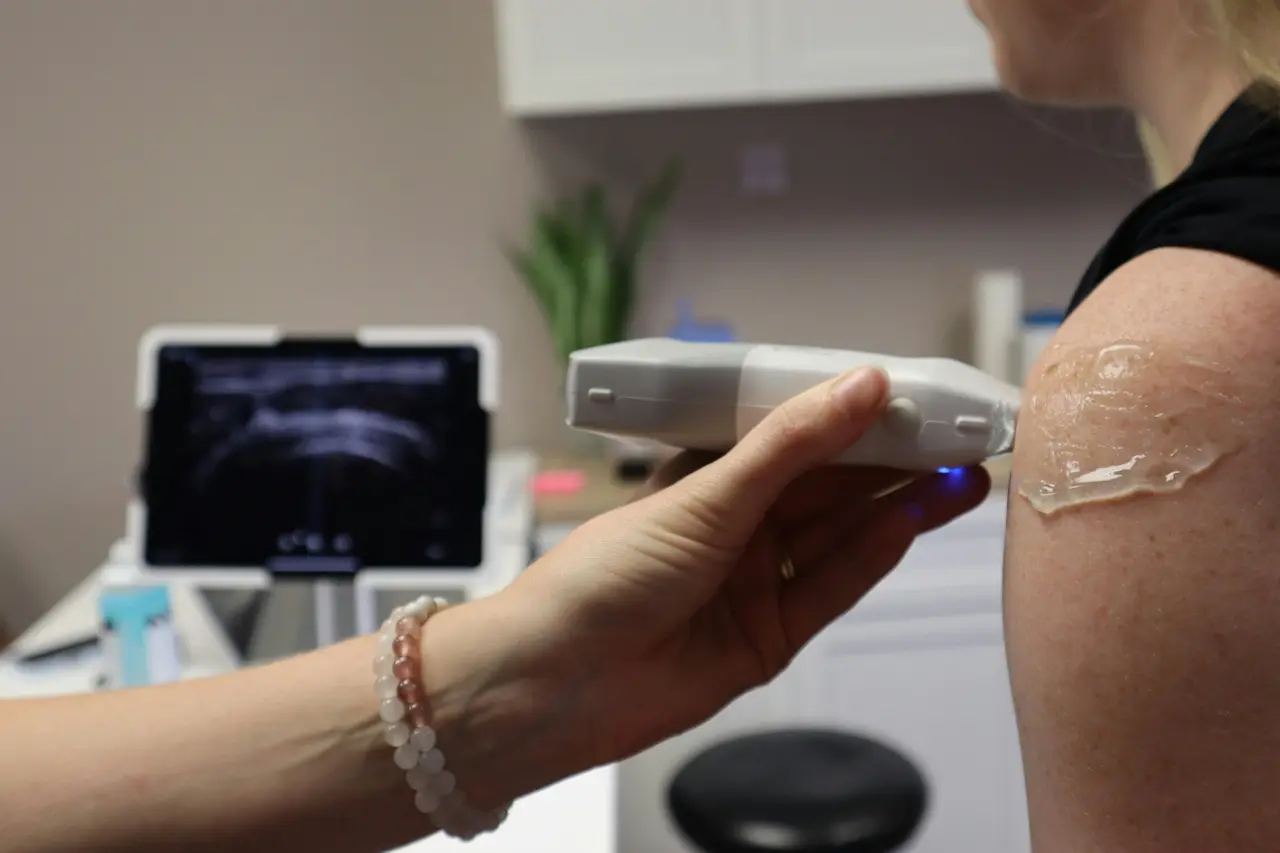
Usually, no. A detailed history and physical assessment often provide enough information to begin treatment safely and appropriately. If imaging seems useful based on your presentation, we can discuss that with you and, if needed, liaise with your GP.
Can physio help bursitis in the shoulder?
Physiotherapy can often help manage shoulder bursitis, especially when it is linked to overload or reduced shoulder capacity. Treatment usually includes education, activity modification and exercises to improve how the shoulder tolerates movement over time.
Is manual therapy enough on its own?
Manual therapy can be helpful for short-term symptom relief or to make movement easier, but it is usually not the whole answer. Most people benefit more from a broader plan that also includes exercise, load management and a clear progression strategy.
What is the difference between rotator cuff pain and frozen shoulder?
Rotator cuff-related pain usually affects lifting, reaching and sleeping on the shoulder, but movement is often still available, even if painful. Frozen shoulder typically involves more marked stiffness, with both active and passive movement becoming restricted.
Should I rest my shoulder completely?
Complete rest is not usually helpful for most shoulder problems unless you have been specifically advised otherwise after a significant injury. In many cases, the better approach is to keep the shoulder moving within tolerance and gradually rebuild strength with the right program.
Can shoulder pain come from the neck?
Yes, sometimes symptoms felt in the shoulder are influenced by the neck or upper back. That is one reason a full assessment matters, especially if your pain travels down the arm, changes with neck movement, or does not behave like a straightforward shoulder issue.



Ready to book an appointment with us?
Visit our Online Bookings page where you can see what times are available and book appointments with all our great Physiotherapists, Chiropractors, and Exercise Physiologists in Willoughby. You can also find us and book appointments via HotDoc and HealthEngine.
Rather speak to someone? Simply give us a call on 02 9190 7588 and our friendly receptionists can help you find a time that suits, and answer any questions you might have.


